A signage board is any board whose job is to carry a message, from the painted panel above a shop to the screen in a lobby showing today’s announcements. The word covers three very different products, and most of the confusion around digital signboards comes from not knowing which of the three someone means.
This page sorts them out. Screenly makes the players and software that run screen-based signboards, and we do not sell printed, engraved, or illuminated sign boards, so the explanation below is neutral about the kinds we do not make. Here is what a signage board is, what makes a signboard digital, where each kind fits, what they cost, and how to design one people actually read.
What a signage board is
A signage board is a flat surface built to display a message in a fixed place, and it is the oldest and simplest piece of signage there is. Shop names, wayfinding arrows, hours, prices, notices, and menus have all lived on boards for as long as there have been shops, and the board itself has evolved from paint to print to light to screens.
The reason the term matters now is that the newest kind of board looks nothing like the old ones. A digital signage board is a screen, and it behaves like a screen, which changes what a board can do. Our what is signage page places boards in the wider signage landscape.
What is a digital signboard?
A digital signboard is a screen that shows managed content in place of a fixed message. It is made of three parts, which are a display, a small media player that renders the content, and software that lets someone update the board from a browser. The content can be an image, a video, a live web page, or an app that updates itself.
The defining difference from every other kind of board is that the message is never fixed. A digital sign board shows the breakfast menu until eleven and the lunch menu after, carries this week’s notices this week and next week’s next week, and updates across fifty locations from one dashboard. Digital boards are what signage becomes when the board stops being an object and starts being a channel.
The three kinds of sign boards
Every signage board you have ever seen belongs to one of three families, and the right choice depends on what the board has to do. Knowing which family you need is most of the decision, so each one is described plainly here.
Printed and static sign boards
Static sign boards are painted, printed, engraved, or fabricated with a fixed message. The common materials are aluminum composite panels for fascias and building signs, acrylic for lobby and office signs, wood and metal for engraved and heritage boards, and corrugated plastic or aluminum for the folding pavement boards that stand outside cafes. They are inexpensive per board, need no power, and last for years, and every change means making a new board. They remain the right choice for messages that never change, such as a building name, a permanent safety notice, or a room number.
Electronic and illuminated signboards
Illuminated boards add light to a fixed message, as with backlit panels and lit channel letters, which makes them visible at night without making them changeable. Electronic signage boards go one step further, with changeable content but limited display ability, such as scrolling text signs, single-color message boards, and the illuminated marquee by the road. An electronic signboard can change its message, which was a genuine advance over print, but it is limited to text and simple graphics, and it uses its own controller rather than signage software. Our LCD vs LED page explains where these illuminated boards sit next to screens.
Digital signboards, meaning screens
Digital signboards are full screens showing images, video, and live content, driven by a player and managed remotely. This is the modern successor to both of the other kinds, and it is the category Screenly runs. A digital signage board can be a single screen in a corridor or part of a fleet across many buildings, and the content is whatever the organization needs it to be.
Most real places use more than one kind, with a fabricated board on the building, printed boards for permanent notices, and screens wherever the message changes.
Where each kind of board fits
The board follows the message. Here is how the three kinds divide up the jobs in a typical organization.
Storefronts and street-facing frontage. Permanent names and branding stay on fabricated boards. Changing messages, such as offers and hours, move to a screen facing out through the glass, which our outdoor digital signage page covers in detail.
Lobbies and receptions. Welcome messages, visitor information, and building notices work best on a screen, often alongside a digital directory for tenants.
Workplaces and corridors. The corkboard becomes a screen carrying announcements, events, and recognition, as our digital bulletin board page describes.
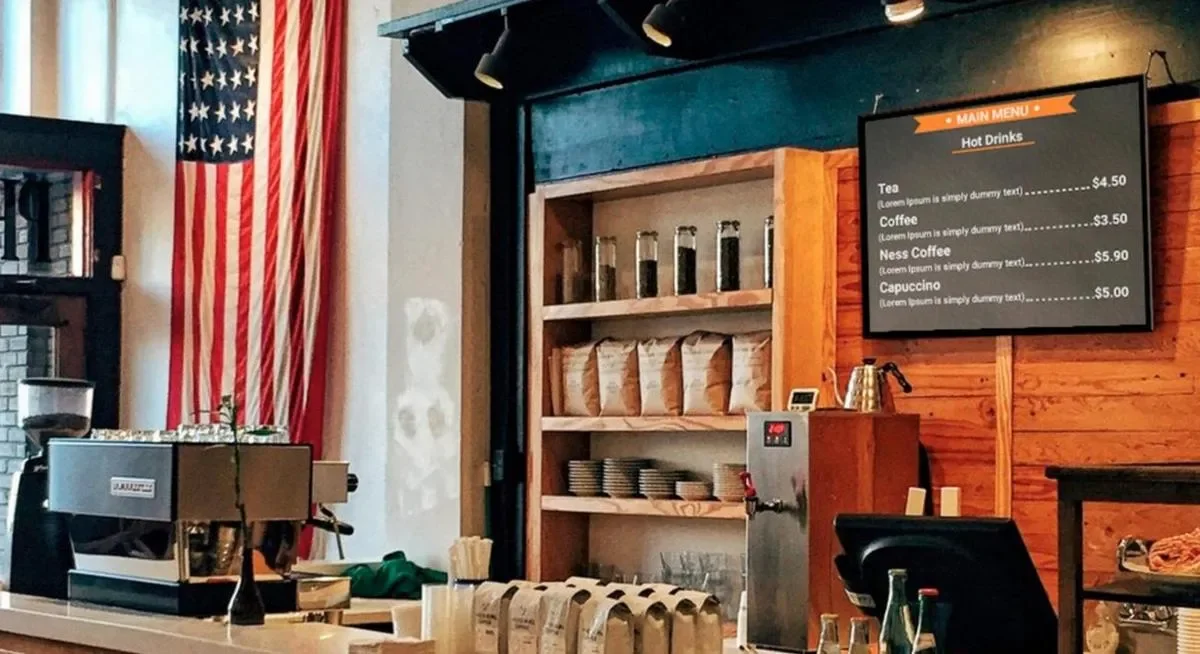
Food service. Menus are the classic case for a digital board, because prices and items change constantly, and our digital menu boards page covers them in full.
Promotion. A digital advertising board in a store or venue rotates campaigns on a schedule, which a printed board cannot do, and our guide to digital signage advertising covers how those campaigns run.
Roadside and long-distance messaging. This is still the territory of illuminated electronic boards, because a low-resolution, high-brightness message board beats a screen that nobody can read from a passing car.
The pattern is consistent. The more often the message changes and the more people need to see it, the stronger the case for the board being digital.
Designing a digital sign board
A board’s job is to be read in a second or two by someone who did not stop for it, and digital sign board design follows from that.
One job per board. A screen carrying one message is read, and a screen carrying six is ignored.
The most important element in the largest type. The price, headline, or name comes first, and everything else is smaller.
High contrast and generous margins. Text should be legible from where people actually stand, with room to breathe around it.
Motion only where it earns attention. A single animated element draws the eye, and a board where everything moves reads as noise.
Content that updates itself. Weather, time, calendars, and data from apps keep the board current without anyone remembering.
Our signage templates page has ready-made layouts for every common board, and our guide to content design goes deeper on the principles.
What digital sign boards cost
The three kinds sit in three different price bands, and the comparison is worth making honestly.
Printed and fabricated boards cost the least per board and the most per change, since every update means a new board. Illuminated electronic boards are a significant one-time purchase, often with permits and electrical work, and they are priced by size and brightness. Digital signboards cost roughly $450 to $950 per screen in one-time hardware, which covers a TV, a Screenly Player at $219 or Screenly Player Max Mk3 at $699, and a mount, plus a per-screen subscription on the pricing page, and every change after that is free.
The full breakdown, including installation and how costs scale across many boards, is on our digital signage cost page. The short version is that digital wins wherever the message changes often, and print wins where it never does.
Running digital signboards with Screenly
A digital signboard is a screen with a player behind it and software in front of it, and Screenly provides both of the parts that do the work. Any screen with an HDMI port becomes a managed board with a Screenly Player, and supported smart TVs become one with Screenly Anywhere and no new hardware. Content, scheduling, and monitoring live in one dashboard for one board or a thousand, and the App Store provides content that keeps the board current on its own.
Moving a board from print to a screen is simpler than it sounds. The screen is usually already there, and the player and software turn it into a board that updates itself.
Getting started
Turning a fixed board into a digital one takes an afternoon the first time and minutes after that. The path looks like this.
- Decide which boards should change. Permanent messages stay printed, and anything that updates moves to a screen.
- Start a trial and connect the first screen with a Screenly Player or Screenly Anywhere.
- Pick a layout from the templates page and fill in the content.
- Add an app or two so the board carries live context such as time, weather, or a calendar.
- Schedule and expand by adding boards wherever the message changes.
From there the board is a channel, and updating it is a few minutes in a browser rather than a trip to the sign shop.
Frequently asked questions
What is a signage board?
A signage board is a flat surface built to display a message in a fixed place, from painted and printed boards to electronic message boards and screens. The three kinds differ in whether and how easily the message can change.
What is a digital signboard?
A digital signboard is a screen showing managed content in place of a fixed message, made of a display, a media player, and software that updates it from a browser. The message can change at any time, on a schedule, or automatically.
What is the difference between an electronic signboard and a digital signboard?
An electronic signboard is a changeable but limited board, such as a scrolling text sign or an illuminated marquee, with its own controller. A digital signboard is a full screen showing images, video, and live content, managed by signage software. The terms overlap in casual use, and digital signboard is the more precise modern term.
Are digital sign boards the same as digital signage?
In practice they are. A digital sign board is a single screen used as a board, and digital signage is the broader system of screens, players, and software that runs them. Every digital sign board is digital signage, and the terms are often interchangeable.
Does Screenly sell printed or illuminated sign boards?
Screenly does not sell printed, engraved, or illuminated sign boards. We make the Screenly Player, Screenly Anywhere, and the software that turn a screen into a digital signboard.
What does a digital sign board cost?
A digital sign board costs roughly $450 to $950 per screen in one-time hardware, which covers a TV, a Screenly Player at $219, and a mount, plus a per-screen subscription. It costs less if an existing TV runs Screenly Anywhere, and changes are free once the board exists.
Can I use a TV as a digital sign board?
Any TV with an HDMI port works with a Screenly Player, and many smart TVs can run Screenly Anywhere directly. A consumer TV suits most indoor boards during business hours, and commercial screens suit continuous or bright placements.
The board that changes with the message
Keep the permanent messages on permanent boards, and put everything that changes on a screen. Screenly turns any screen into a digital signboard that updates itself.